


Your voice is an instrument — and just like any instrument, it needs care, attention, and a little time each day to stay in tune.
Whether you’re rehearsing for a performance or simply singing for joy, a mindful warm-up helps your voice stay healthy, flexible, and expressive. It’s not about perfection — it’s about connection.
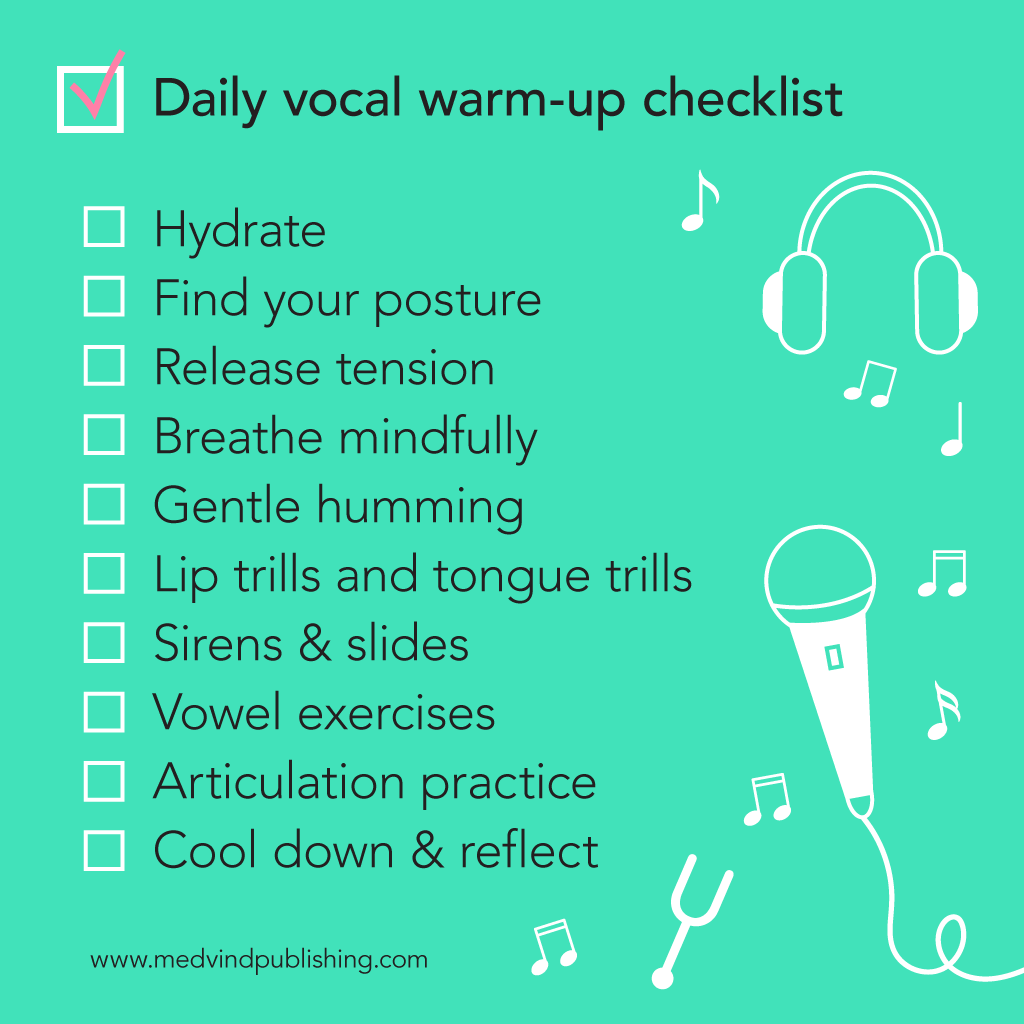
Here’s a gentle 10-step checklist to guide your daily vocal routine.
1. Hydrate Before You Begin
Your vocal cords work best when they’re well-lubricated. Drink water before and during your warm-up — hydration keeps your sound smooth and prevents strain.
2. Find Your Posture
Stand tall and grounded. Imagine a string lifting you from the crown of your head while your shoulders stay relaxed. Posture creates space for breath and resonance.
3. Release Physical Tension
Your body is part of your instrument. Gently roll your neck, stretch your shoulders, and release your jaw. A relaxed body supports a relaxed voice.
4. Breathe with Intention
Take deep, steady breaths from your diaphragm — not your chest. Feel your ribs expand, your shoulders stay still, and your breath flow naturally. 🌬️
Good breath support is the foundation of every healthy sound.
5. Start with Gentle Humming
Before singing big notes, begin with quiet hums. Humming warms up the vocal cords without pressure and helps you tune into your natural resonance.
6. Add lip and tongue trills
Lip trills and tongue trills connect breath and sound while easing facial tension. They’re simple, fun, and effective.
7. Try vocal sirens and slides
Glide smoothly from your lowest comfortable note to your highest, then back down. This warms up your entire range and builds vocal flexibility.
8. Practice vowel sounds
Sing gentle scales or arpeggios using vowels (A–E–I–O–U). Notice how each vowel feels and sounds — this builds clarity, consistency, and resonance.
9. Work on articulation
Do light tongue twisters or consonant drills to sharpen your diction. Clear articulation helps your words shine through your music.
10. Cool down and reflect
Just as you warm up, take time to cool down. End with soft humming and a few deep breaths. Then, jot a quick reflection in your Voice journal — note how your voice felt and what you’d like to focus on next time.
Make it a ritual, not a routine
Daily warm-ups are more than a checklist — they’re a way to connect with your voice, your body, and your creativity.
When done mindfully, even a few minutes can leave you feeling centered, confident, and ready to sing your heart out.
If you’d like to track your progress, explore mindful reflections, and set vocal goals, our My Voice Journey Notebook is the perfect companion.
It helps you stay inspired, consistent, and in tune — with your music and yourself.